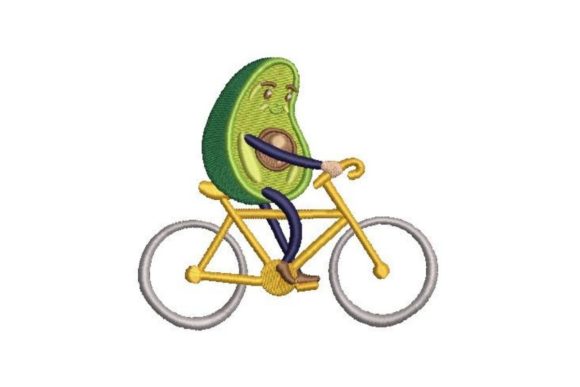
Avocado Cyclist Embroidery Review for Craft Fair Success
As an embroidery designer preparing for a bustling weekend market, my first task is to assess new designs with a critical eye for what truly sells on the table. Today, I’m looking at Avocado Cyclist. The immediate impression is one of cheerful, playful fun. It’s not rustic or elegant—it’s simply cute and funny, a combination that often catches a browsing customer’s eye and prompts a smile. This mood is perfect for products aimed at adding a lighthearted touch to everyday items.
Where Avocado Cyclist Stands Out on the Booth Display
Imagine your table: tote bags, aprons, tea towels, caps, and small pouches all arranged to attract attention. Avocado Cyclist has a distinct advantage here. Its concept is instantly understandable—an avocado on a bike—which means it communicates its charm at a glance, a crucial factor in a busy market environment. I envision it shining on specific products.
On a crisp, natural canvas tote bag or a market bag, it becomes a bold focal point, suggesting a love for simple, joyful living. Applied to a kitchen apron or tea towel, it leans into that lighthearted, modern kitchen aesthetic. As an embroidered patch, it offers versatility for customers. Stitched onto a bright, solid-colored fabric pouch or a pillow cover for a child’s room, it feels perfectly decorative. For a cap, the playful nature works well, though the curved surface requires careful planning.
Practical Production for the Handmade Seller
Turning this machine embroidery design into a profitable craft fair product requires practical evaluation. The design appears to have elements like the avocado shape and bicycle details that could range from moderate to dense stitch areas. For batch production, this is a key consideration.
Scaling and Application Notes
For smaller items like patches or pouches, you must test whether the design’s details, especially potential tiny elements like bike spokes or facial features, retain clarity when stitched small. On textured fabrics like terry towels or thick fabrics like denim caps, stitch density and stabilizer choice become paramount to prevent puckering and ensure a clean finish. On dark fabrics, thread color contrast is vital—bright greens and accents will need to pop. Always test the design on scrap fabric first, mimicking your final product’s material.
The Online Sales Angle
For Etsy sellers and digital shops, Avocado Cyclist photographs well. Its clear, cute subject matter creates appealing printable mockups and real product photos that convey a sense of handmade quality. It feels repeatable for batch production of, say, a series of tote bags, aiding small shop product consistency. However, I advise confirming the specific included embroidery file formats and any commercial embroidery license terms directly from the designer before selling finished products.
Enhancing Customer Engagement and Product Value
This design directly boosts customer attention. In a booth, a sample tote bag with Avocado Cyclist prominently displayed can spark conversations and laughter, increasing engagement. It doesn’t look mass-produced; it looks thoughtfully applied, enhancing perceived value. It fits a brand centered on whimsy, fun, and modern craft.
For buyer engagement, it’s a giftable design. A cyclist might buy it for themselves, but a friend might buy it as a playful gift for an avocado-loving roommate. This dual appeal expands your potential customer base right at the fair.
Final Designer Checklist Before Production
Before you hoop your first bag, run through this quick list. Review spacing and overall size to ensure it fits your desired hoop size comfortably. Inspect stitch density in the file preview to plan your stabilizer strategy—a good stabilizer is non-negotiable for a professional finish. Create at least one real mockup on the final product fabric; a physical sample tells you more than any screen preview. Compare fabric colors to your planned thread palette for optimal contrast. Finally, ensure your digital embroidery file works seamlessly with your machine. This upfront work transforms a cute design asset into a standout, sellable finished product that will make your handmade market booth shine.