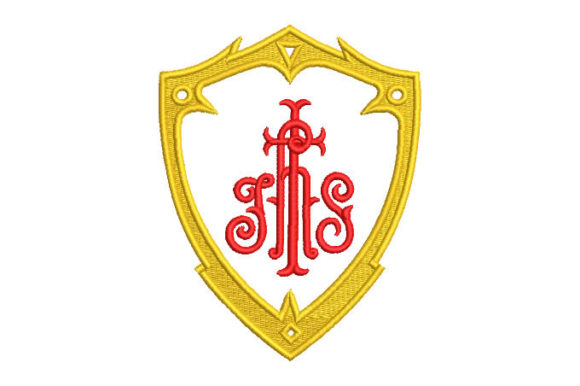
JHS Religious Shield: A Design Review for Business Merchandise
As an embroidery designer working with small brands and merchandise creators, I approach every new file with a critical eye for business application. When I evaluate a design like the JHS Religious Shield, my primary questions are: Does it translate into a professional, branded product? How will it perform as an embroidered patch or uniform accent? Let's review this religion-themed embroidery design from a commercial use perspective.
First Impression and Visual Brand Personality
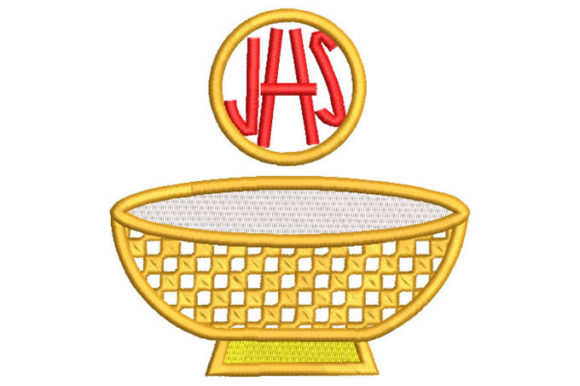
The JHS Religious Shield embroidery design conveys a sense of classic, meaningful intent. For a business operating within a faith-based community or wanting to express a values-driven brand identity, this design offers a foundational symbolic element. It leans toward a traditional and elegant aesthetic, rather than playful or modern. This is important for a boutique, café, or handmade shop whose clientele values that visual language. The “shield” motif itself suggests protection and steadfastness, which can subtly enhance customer trust and brand recognition when used consistently.
Real-World Applications for Small Business Merchandise
The true test of any machine embroidery design is its performance across different products. Here’s how the JHS Religious Shield could integrate into a small business’s branding and merchandise line.
Embroidered Patches and Product Labels
This design is a strong candidate for creating custom embroidered patches. Patches are versatile: they can be affixed to tote bags, aprons, or even used as standalone product labels for handmade goods. For a pet brand, bakery, or florist, a patch bearing the JHS Religious Shield could serve as a distinctive mark on customer gift packaging or as an accent on a canvas tote. The design’s likely symmetry and central focus make it ideal for a patch format.
Uniform and Apparel Branding
For staff uniforms, apron embroidery, or cap designs, placement is key. As a chest logo on a work shirt or a sleeve detail, the JHS Religious Shield would offer a professional, understated brand accent. On a cap front, the design would need to be evaluated at a smaller size to ensure clarity. For a café or creative studio, this could elevate the perceived value of custom apparel, making uniforms feel more cohesive and intentional.
Tote Bags and Event Merchandise
As a tote bag design, this emblem could become a recognizable brand asset for a boutique or Etsy seller. It’s a design that customers might appreciate for its meaningful touch, making the merchandise feel more special than generic. For event merch or customer gifts, such an embroidered tote becomes a lasting reminder of the brand’s ethos.
Practical Considerations for Production and Durability
Success in commercial embroidery depends on technical execution. Here are the crucial points a business must check before running production.
- Test at Small Patch Size: Before committing, test the embroidery file at the actual size you intend to use, especially for cap fronts or small product labels. Tiny lettering or intricate outlines can lose definition.
- Evaluate Stitch Density and Fabric: High stitch density can be challenging on textured or lightweight fabrics. Always test on the real fabric you’ll use—like apron canvas or uniform polyester—with the proper stabilizer.
- Thread Color Contrast: Consider how the design will look on dark uniforms versus light tote bags. You may need to adjust thread color palettes for optimal contrast and visibility.
- Hoop Size and Stabilizer: Confirm the required hoop size for your machine and project. Using the correct stabilizer is non-negotiable for a clean finished product that withstands frequent washing, crucial for uniforms.
Strengthening Brand Identity and Customer Engagement
Integrating the JHS Religious Shield into your merchandise isn’t just decoration; it’s a strategic branding decision. For a business whose identity aligns with this symbol, it fosters visual consistency across aprons, patches, and tote bags. This consistency builds professionalism and aids brand recall. A customer seeing the same emblem on a staff apron, a store tote, and an event giveaway develops a stronger connection to your handmade product or brand story. It elevates the merchandise from a simple commodity to a value-carrying asset.
Essential Designer Notes Before Business Use
My final advice to fellow embroidery shops, apparel decorators, and digital embroidery file buyers revolves around due diligence.
- Always Create a Printable Mockup: Before production, generate a mockup for client approval. This visualizes the design on the actual product and avoids misunderstandings.
- Test in Black and White: Run a simple test in monochrome to assess the design’s foundational form and spacing without color distractions.
- Compare with Other Design Assets: Place the embroidered sample beside your other branding elements. Does the JHS Religious Shield complement your overall visual identity?
- Confirm Commercial Licensing: The product description mentions it is a machine embroidery design for such projects. However, always verify the specific license terms of the digital embroidery file to ensure it covers your intended commercial embroidery use for merchandise.
- Start with a Pilot Project: Run a small batch on the actual items—like a few caps or aprons—to evaluate wash durability and customer reception before a full rollout.
In summary, the JHS Religious Shield embroidery design presents a meaningful opportunity for businesses seeking to infuse their merchandise with a classic, values-oriented symbol. Its potential as a patch, uniform accent, or tote bag mark is significant, provided it is technically evaluated for size, fabric, and durability. By approaching it not just as a design, but as a brand identity asset, small business owners can create merchandise that resonates deeply and stands the test of time and use.