An Embroidery Designer's Craft Fair Review: Reptile Eye
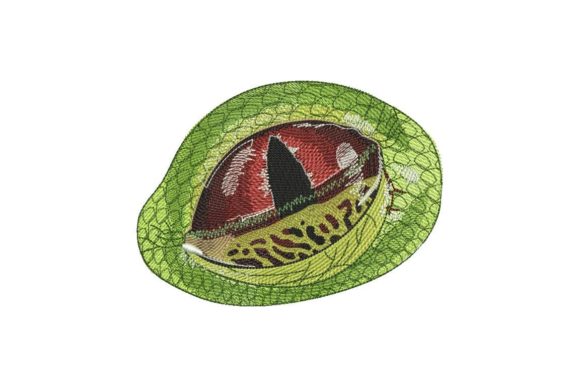
As an embroidery designer preparing for a weekend craft fair, my first task is to vet my digital embroidery files. I look at each design with a specific question: will this sell on a physical product at my booth? Today, I'm reviewing Reptile Eye, a photorealistic reptile eye machine embroidery design. My evaluation is grounded in real-world product judgment—what looks good in person, what is practical to produce, and what will catch a customer's eye.
First Impression: Bold, Unique, and Premium
The name Reptile Eye immediately conveys something bold and striking. This isn't a cute, farmhouse, or rustic motif. It leans into modern, edgy, and decidedly premium visual appeal. The description emphasizes its photorealistic and unique nature, promising to make any fabric stand out. For a craft fair seller, this is a powerful starting point. A design that feels "real" and "unique" taps directly into the handmade market's desire for one-of-a-kind items that mass-produced goods can't offer.
Where Reptile Eye Stands Out on the Booth Display
Imagine my table: a mix of embroidered tote bags, aprons, tea towels, caps, patches, small pouches, pillow covers, and giftable items. Reptile Eye won't be for every product, but it will be a star on select ones.
Tote bags and market bags are a prime candidate. The larger surface area allows the design to be a dramatic focal point. A photorealistic eye on a simple canvas tote instantly elevates it from utilitarian to artistic.
Pillow covers offer another excellent canvas. In a home decor context, Reptile Eye becomes a statement piece, adding a touch of sophisticated, natural-world intrigue.
Embroidered patches are a fantastic, versatile application. A well-executed Reptile Eye patch can be sold as a standalone item for customization or applied to a hat or pouch at the booth, demonstrating its value immediately.
Caps present a challenge due to their curved surface, but if the embroidery file is adapted well, a reptile eye on the front of a cap creates an incredibly cool, focused look.
For tea towels or aprons, I'd be more selective. The design might feel too intense for a classic kitchen aesthetic, but on a modern, minimalist apron or a dark-colored towel, it could work as a bold accent.
Small pouches could benefit from a smaller version of the design as a unique detail, making a simple pouch feel special and gift-worthy.
Visual Clarity and Scale
Photorealistic designs demand careful handling. The key question is: does Reptile Eye retain its impressive detail at smaller sizes? For patches or pouches, I must test this rigorously. Tiny details and dense stitch areas in an eye design could lose clarity or become too thick on textured fabrics like towels. Before any batch production, I will absolutely stitch it out on scrap fabric at various sizes. I need to see how it performs on both light and dark fabric to check thread contrast. A design that looks "amazing" online might lose its impact if the iris detail blends into a dark background.
Photographing for Online and Booth Appeal
For my Etsy listings and booth samples, visual impact is everything. Reptile Eye should photograph exceptionally well if stitched correctly. The realism should jump out in pictures, making it a strong asset for online sales. At the craft fair, its uniqueness will draw direct customer attention. People will stop to look closely, which is perfect for engagement. It feels like a high-value item, justifying a slightly higher price point for the finished product.
The Reality of Batch Production
Is Reptile Eye repeatable? For a craft fair, I need multiple copies of my best-selling items. High stitch density designs can be time-consuming and require good stabilizer and consistent fabric quality. I'll need to confirm the recommended hoop size from the embroidery file itself and ensure my machine can handle it efficiently. If the design is complex, I might focus on offering it on a few premium products rather than across a huge range, maintaining its exclusive feel and managing my production time.
Essential Embroidery Designer Notes Before Selling
Turning any digital embroidery file into a successful handmade product requires a disciplined checklist.
- Always create a real mockup. Don't just rely on a printable mockup. Stitch Reptile Eye on the actual fabric you plan to use—be it canvas for a tote, twill for a cap, or linen for a pillow.
- Inspect stitch density and thread count. Photorealistic designs often use many colors and dense fills. This affects production time and material cost.
- Test on textured surfaces. How does it look on a curved cap? Does it pull on a stretchy pouch fabric?
- Compare fabric colors. Stitch the design on at least a light and a dark sample to ensure the chosen thread palette works universally.
- Confirm commercial licensing. Before I sell any finished product at a fair or on Etsy, I must verify that my purchase of the Reptile Eye machine embroidery design includes the right to use it commercially. This is a non-negotiable step for any small shop product.
Final Judgment for the Craft Fair Booth
Reptile Eye is a powerful design asset. Its bold, premium mood fills a specific niche in my booth lineup. It won't be the cute, every-day item, but it will be the conversation starter, the piece that makes someone say, "Wow, that's incredible." Its best chances to sell are as a focal point on larger items like tote bags and pillows, or as a high-quality standalone embroidered patch. For boutique makers and creative entrepreneurs, it adds depth to a product range.
My action plan is clear: test it thoroughly on scrap fabric, perfect its application on one or two hero products (like a standout tote bag for the front of my table), and ensure my production process is reliable. With that done, Reptile Eye has the potential to be not just an amazing embroidery, but a truly impressive craft fair product.